Tankless water heater efficiency is one of the main reasons homeowners choose this type of system. Unlike traditional tank heaters that keep water hot all the time, tankless heaters heat water only when needed. This on-demand operation can reduce energy use, but the actual savings depend on home size, water usage, and proper installation.
This guide explains tankless water heater efficiency, how it compares to tank heaters, and what affects energy consumption over time.
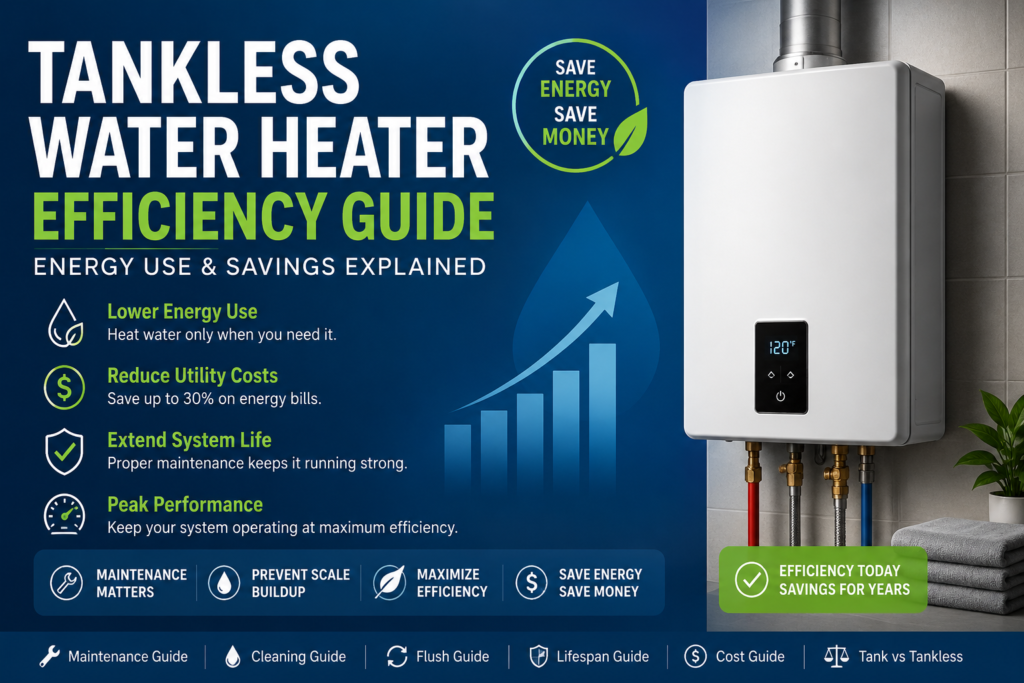
What Does Tankless Water Heater Efficiency Mean?
Efficiency refers to how much energy the heater uses to produce hot water. Tankless heaters are often more efficient because they do not store hot water, which reduces standby heat loss.
Tank heaters keep water hot 24 hours a day, even when not in use. Tankless heaters only use energy when hot water is needed.
Typical efficiency comparison:
| Heater Type | Efficiency |
|---|---|
| Tank heater | 60–70% |
| Electric tankless | 95–99% |
| Gas tankless | 80–95% |
Higher efficiency means less wasted energy, but real savings depend on usage.
If the heater is not working correctly, efficiency may drop. Use the tankless water heater troubleshooting guide to check for problems that reduce performance.
Why Tankless Heaters Are More Efficient
Tankless heaters avoid standby heat loss. This means they do not waste energy keeping water hot when no one is using it.
Efficiency advantages:
- no storage tank heat loss
- on-demand heating
- modern sensors control output
- less wasted fuel
- compact design
These features help reduce energy use, especially in homes with moderate hot water demand.
Electric vs Gas Tankless Efficiency
Electric tankless heaters are usually more efficient than gas units, but gas heaters can produce more hot water.
| Type | Efficiency | Notes |
|---|---|---|
| Electric tankless | Very high | Best for small homes |
| Gas tankless | High | Better for large homes |
| Tank heater | Lower | Constant heating loss |
Electric heaters convert most electricity into heat, but gas heaters may be better for high demand.
How Usage Affects Efficiency
Tankless water heater efficiency depends on how much hot water the home uses.
Tankless is more efficient when:
- hot water use is moderate
- fixtures not used all day
- heater sized correctly
- system maintained regularly
Tankless may save less energy when:
- hot water used constantly
- heater undersized
- scale buildup present
- installation incorrect
Keeping the heater clean helps maintain efficiency. Follow the tankless water heater maintenance guide for regular service.
Mineral buildup can reduce heat transfer. Flushing helps keep efficiency high. Use the tankless water heater flush guide to remove scale safely.
Energy Savings Compared to Tank Heaters
Energy savings vary depending on the home.
Typical savings:
| Household Size | Expected Savings |
|---|---|
| Small home | Higher savings |
| Medium home | Moderate savings |
| Large home | Depends on demand |
For a broader comparison between traditional and tankless systems, see our Tank vs Tankless Water Heater guide
Homes that use less hot water usually benefit more from tankless efficiency.
Heavy use homes may still benefit from longer lifespan even if savings are smaller.
Efficiency and Heater Size
Correct sizing is important for efficiency. You can use the tankless water heater size chart to choose the correct heater for your home.
If the heater is too small:
- runs at full power often
- may overheat
- efficiency drops
- temperature fluctuates
If the heater is too large:
- higher installation cost
- may not save energy
Matching heater size to demand helps maintain stable performance and good efficiency.
Larger heaters may also increase installation price, so check the tankless water heater cost guide before choosing a unit.
Efficiency and Maintenance
Maintenance has a big effect on efficiency.
Without maintenance:
- scale buildup blocks heat transfer
- burner runs longer
- more energy used
- heater may shut off
- lifespan shorter.
Poor efficiency and overheating can also reduce tankless water heater lifespan over time.
Regular flushing and cleaning help keep efficiency high.
Homes with hard water may require more frequent cleaning. See our Tankless Water Heater Cleaning Guide for recommendations and maintenance intervals.
Yearly service helps maintain efficiency and prevent performance problems.
When Tankless Is Most Efficient
Tankless heaters are usually most efficient when:
- hot water use is moderate
- the heater is properly matched to the home’s demand
- maintenance done regularly
- installation done properly
- water quality is good
In these conditions, tankless heaters may use less energy than tank heaters.
How Poor Efficiency Can Lead to Tankless Water Heater Problems
Low efficiency in a tankless water heater can cause performance problems that many homeowners think are mechanical failures. When the heater is not working efficiently, it may need more time to heat water, run at higher temperature, or shut down to protect internal components. This can happen when the heater is undersized, not maintained regularly, or installed incorrectly.
Common problems caused by poor efficiency include:
- water temperature changing during use
- heater shutting off unexpectedly
- slow heating
- higher energy bills
- frequent error codes
- reduced hot water output
These issues often appear when mineral buildup reduces heat transfer or when the heater must work harder than normal to keep up with demand. Regular maintenance, correct sizing, and proper installation help keep the heater running efficiently and prevent many of these problems.
Does Hard Water Reduce Tankless Water Heater Efficiency?
Yes. Mineral scale inside the heat exchanger acts as an insulating layer and forces the system to work harder. Over time, scale buildup can reduce efficiency, increase energy consumption, and shorten component life.
Regular flushing and cleaning help restore efficiency and maintain proper water flow. Homes with hard water often benefit from yearly maintenance and occasional professional service.
Proper maintenance helps preserve efficiency and can also extend the overall lifespan of the unit.
FAQ
Are tankless water heaters more efficient?
Yes, because they do not store hot water and avoid standby heat loss.
Do tankless heaters save money?
They can save energy, but savings depend on usage and installation cost.
Is electric tankless more efficient than gas?
Electric is usually more efficient, but gas provides higher output.
Can scale reduce efficiency?
Yes, mineral buildup reduces heat transfer.
Does maintenance affect efficiency?
Yes, cleaning the heater helps it use less energy.
Does flushing a tankless water heater improve efficiency?
Yes. Removing mineral buildup allows heat to transfer more effectively and can help reduce energy consumption while improving hot water performance.
Final Thoughts
Regular tankless water heater efficiency depends on choosing the correct unit size, maintaining the heat exchanger, and preventing mineral buildup. Proper maintenance can help reduce energy use and extend the lifespan of your system.
If you want to maximize efficiency, annual flushing and regular cleaning are among the most important tasks homeowners can perform. Hard water scale is one of the biggest factors affecting long-term performance and operating costs.
For additional resources, see: