Keeping your tankless water heater clean is one of the easiest ways to improve efficiency, extend the unit’s lifespan, and avoid costly repairs. Mineral buildup, dust, and debris can reduce water flow and force the system to work harder than necessary.
In this guide, we’ll explain how to clean a tankless water heater, how often maintenance is required, and which supplies can make the process easier.
Disclosure: As an Amazon Associate, we earn from qualifying purchases. This comes at no extra cost to you and helps support our research and reviews.
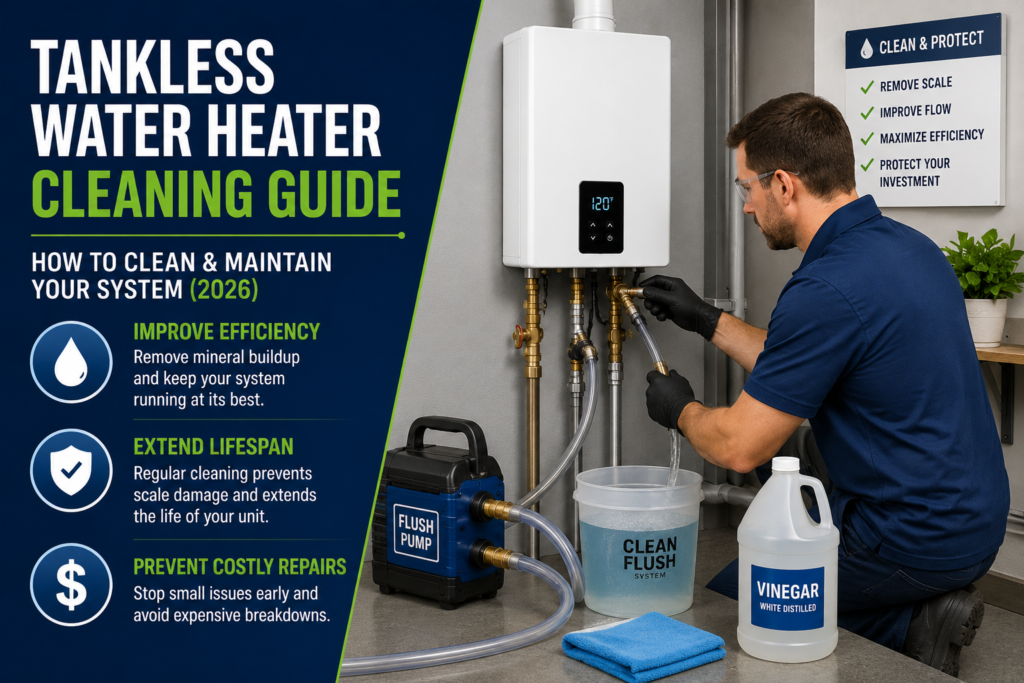
Why Cleaning Your Tankless Water Heater Matters
Unlike traditional water heaters, tankless units rely on a heat exchanger with narrow passages. Over time, minerals from hard water can accumulate inside the unit and reduce performance.
Regular cleaning can help:
- Maintain energy efficiency.
- Improve hot water flow.
- Prevent overheating and error codes.
- Extend the life of the heat exchanger.
- Reduce repair costs.
- Maintain consistent water temperature.
Ignoring maintenance may lead to reduced performance and premature component failure.
Signs Your Tankless Water Heater Needs Cleaning
A tankless water heater usually gives several warning signs before mineral buildup begins affecting performance.
Reduced Water Pressure
Scale deposits inside the heat exchanger can restrict water flow and cause lower pressure throughout the home.
Inconsistent Water Temperatures
If your hot water suddenly turns cold or fluctuates during showers, mineral buildup may be reducing heat transfer efficiency.
Error Codes
Many modern units display maintenance-related error codes when flow rates or temperatures fall outside normal ranges.
Strange Noises
Rumbling, popping, or vibrating sounds may indicate excessive scale accumulation inside the system.
Longer Wait Times for Hot Water
If it takes longer than usual for hot water to reach faucets and showers, restricted flow or buildup inside the heat exchanger may be contributing to the problem.
Recognizing these symptoms early can help prevent expensive repairs and extend the life of your unit.
How Often Should You Clean a Tankless Water Heater?
The ideal cleaning interval depends largely on water hardness.
Soft Water
- Every 18 to 24 months.
Moderate Water Hardness
- Once per year.
Hard Water
- Every 6 to 12 months.
Homes using well water may require more frequent maintenance.
If you’re unsure about your water quality, yearly cleaning is generally a safe recommendation.
Can Hard Water Affect Cleaning Frequency?
Yes. Water hardness is one of the biggest factors affecting maintenance requirements.
Soft Water
Homes with soft water may only require cleaning every 18 to 24 months.
Moderate Hardness
Annual cleaning is recommended for most households.
Hard Water
Homes supplied by hard water should typically flush and clean the system every 6 to 12 months.
Well Water
Well water may contain additional minerals and sediment, making more frequent maintenance necessary.
If you are unsure about your water quality, annual cleaning is generally a safe recommendation.
Exterior Cleaning
Cleaning the outside of the unit is simple.
- Turn off the power.
- Wipe the cabinet with a soft cloth.
- Remove dust from air intake openings.
- Avoid harsh cleaners or abrasive pads.
- Keep the surrounding area clear of debris and stored items.
Good airflow helps maintain efficient operation.
Cleaning the Inlet Water Filter
Most tankless water heaters include a small inlet filter designed to trap debris.
Steps
- Shut off power and water supply.
- Locate the inlet filter.
- Remove the filter carefully.
- Rinse it under running water.
- Use a soft brush if necessary.
- Reinstall the filter securely.
A clogged filter can cause low flow rates and temperature problems.
Flushing Mineral Deposits
The most important part of tankless water heater maintenance is removing mineral scale from the heat exchanger.
Scale buildup reduces efficiency and forces the system to work harder.
For a complete walkthrough, see our How to Flush a Tankless Water Heater guide.
Most homeowners use:
- White vinegar.
- Commercial descaling solutions.
- A flush pump.
- Isolation valves.
- Hoses and a bucket.
Flushing typically takes 45 to 90 minutes.
Vinegar vs Commercial Descaling Solutions
Both vinegar and commercial descaling solutions are commonly used to remove mineral buildup from tankless water heaters.
| Method | Advantages | Disadvantages |
|---|---|---|
| White Vinegar | Affordable and widely available | May require longer circulation time |
| Commercial Descaling Solution | Faster and more effective against heavy scale | More expensive |
White vinegar works well for routine maintenance, while commercial descalers may be better suited for severe mineral buildup or homes with very hard water.
Best Cleaning Supplies
Using the right tools makes maintenance much easier.
Flush Kits
A complete flush kit includes:
- Pump.
- Hoses.
- Bucket.
- Necessary fittings.
See our:
Best Tankless Water Heater Flush Kit (2026 Buyer’s Guide)
Descaling Solutions
Commercial descalers can remove stubborn mineral buildup and may work faster than vinegar.
See our:
Best Tankless Water Heater Descaling Solution (2026 Buyer’s Guide)
How Long Does Tankless Water Heater Cleaning Take?
Exterior cleaning: 5–10 minutes

Filter cleaning: 10–15 minutes

Complete flushing and descaling: 45–90 minutes

Professional service: approximately 1–2 hours
The exact time required depends on water quality, scale buildup, and whether the maintenance is performed by the homeowner or a professional.
Common Mistakes to Avoid
Avoid these common errors:
Skipping Annual Maintenance
Mineral buildup worsens over time and becomes more difficult to remove.
Using Harsh Chemicals
Strong chemicals may damage internal components.
Forgetting to Clean the Water Filter
A dirty filter can restrict flow and mimic more serious problems.
Running the Unit Dry
Always follow the manufacturer’s instructions and ensure water supply is restored before restarting the system.
Ignoring Error Codes
Error messages often indicate maintenance issues before serious damage occurs.
Can You Clean a Tankless Water Heater Yourself?
Most homeowners can perform routine maintenance themselves using a flush kit and the proper cleaning solution.
DIY cleaning is appropriate for:
- Annual maintenance.
- Mild to moderate mineral buildup.
- Homeowners comfortable with basic tools.
Professional service may be preferable when:
- Severe scale buildup is present.
- Persistent error codes appear.
- Unusual noises continue after cleaning.
- The manufacturer recommends professional maintenance.
Following the owner’s manual and manufacturer recommendations is always advised.
Maintenance Schedule
| Maintenance Task | Recommended Frequency |
|---|---|
| Exterior cleaning | Every 3 months |
| Filter inspection | Every 6 months |
| Heat exchanger flushing | Every 6–24 months |
| Professional inspection | Annually |
Regular maintenance helps improve efficiency and reduce the likelihood of premature component failure.
FAQ
Can I clean a tankless water heater without vinegar?
Yes. Commercial descaling solutions are available and may provide faster results.
Is vinegar safe for tankless water heaters?
White vinegar is commonly used and recommended by many manufacturers for routine descaling.
How long does cleaning take?
Most maintenance procedures require between 45 and 90 minutes.
What happens if I never clean my tankless water heater?
Scale buildup can reduce efficiency, lower water pressure, trigger error codes, and shorten the life of the unit.
Do tankless water heaters require yearly maintenance?
In most homes, annual maintenance is recommended. Areas with hard water may require more frequent cleaning.
Does Cleaning Increase Tankless Water Heater Lifespan?
Yes. Routine cleaning and descaling help maintain efficiency and reduce stress on internal components.
Neglecting maintenance can lead to increased energy consumption, lower performance, and premature wear.
Properly maintained tankless water heaters often provide reliable service for 15 to 20 years or longer.
Final Thoughts
Routine cleaning is one of the best ways to keep a tankless water heater running efficiently and reliably. Whether you use vinegar or a commercial descaling solution, regular maintenance can improve performance, reduce energy costs, and help your system last longer.
For more maintenance tips, visit: