
Choosing the correct tankless water heater size is one of the most important steps when buying a new unit. A heater that is too small may cause cold water during showers, temperature fluctuations, or the common problem where the water goes hot then cold. A heater that is too large may cost more than necessary and increase installation expense.
Larger units can also increase installation price, so you may want to review the tankless water heater cost guide before choosing a system.
This tankless water heater size chart will help you understand flow rate (GPM), how many fixtures your home needs, and what size heater works best for different household sizes.
If you are not familiar with GPM, see the tankless water heater flow rate guide to understand how hot water demand is calculated.
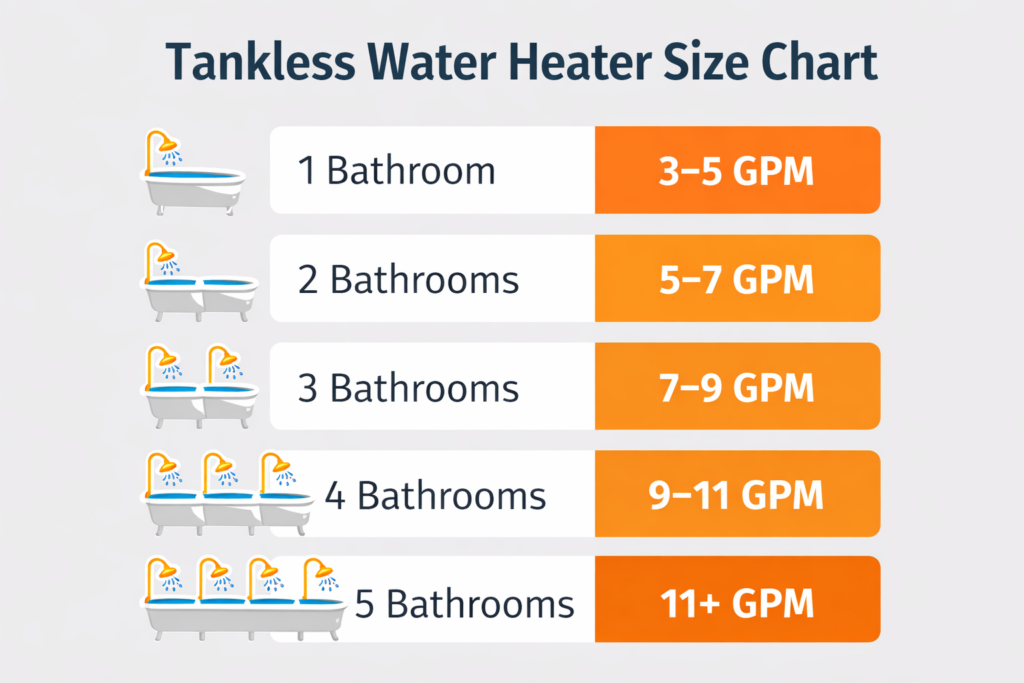
Tankless Water Heater Size Chart
Use the chart below to estimate the correct size based on the number of bathrooms and how many fixtures may run at the same time.
| Home Size | Bathrooms | Fixtures Running at Once | Recommended GPM | Typical Heater Type |
|---|---|---|---|---|
| Small apartment | 1 | 1 shower + sink | 3–4 GPM | Electric or small gas |
| Small house | 1–2 | Shower + sink | 4–6 GPM | Gas recommended |
| Medium house | 2 | 2 showers or shower + washer | 6–8 GPM | Gas tankless |
| Large house | 3 | 2–3 fixtures at once | 8–10 GPM | High-output gas |
| Very large home | 4+ | Multiple showers + appliances | 10–11+ GPM | Large gas / multiple units |
This chart is only a guideline. Actual size depends on groundwater temperature, plumbing layout, and water usage habits.
What Does GPM Mean?
GPM means gallons per minute, which tells how much hot water the heater can produce at one time.
Each fixture uses a certain amount of water:
| Fixture | Average GPM |
|---|---|
| Shower | 2.0 – 2.5 |
| Kitchen sink | 1.5 – 2.0 |
| Bathroom sink | 1.0 – 1.5 |
| Washing machine | 2.0 – 2.5 |
| Dishwasher | 1.0 – 2.0 |
To size a tankless heater, add the fixtures you want to run at the same time.
Example:
Shower (2.5) + sink (1.5) = 4 GPM needed
If the heater is smaller than the demand, water temperature may drop.
If you often experience performance issues, see the tankless water heater troubleshooting guide to check for sizing or flow problems.
How Groundwater Temperature Affects Size
Cold incoming water requires more heating power.
Homes in colder climates need larger heaters than homes in warm climates.
| Climate | Incoming Water | Heater Needed |
|---|---|---|
| Warm (South) | 60–70°F | smaller unit OK |
| Moderate | 50–60°F | medium unit |
| Cold (North) | 40–50°F | larger unit |
Because tankless heaters heat water instantly, colder water lowers the GPM capacity.
This is why some heaters that work well in warm areas may feel undersized in colder regions.
Gas vs Electric Size Differences
Gas heaters usually provide more GPM than electric units.
Electric tankless size limits
- usually 2–5 GPM
- good for small homes
- may need electrical upgrade
Gas tankless size limits
- usually 6–11+ GPM
- good for whole house
- higher installation cost
- requires venting
Most homeowners choose gas for whole-house use.
If you are comparing fuel types, see the tankless gas vs electric guide to understand performance differences.
Signs Your Tankless Heater Is Too Small
If your heater is undersized, you may notice:
- water goes hot then cold
- weak hot water when multiple fixtures run
- heater shuts off
- temperature fluctuates
- error codes during heavy use
Many homeowners think the heater is broken when the real problem is sizing.
Mineral buildup can also reduce performance, so regular cleaning helps.
Follow the tankless water heater flush guide to keep the unit working correctly.
Should You Install Two Tankless Water Heaters?
Large homes sometimes use two units instead of one.
Reasons to install multiple heaters:
- very large house
- long plumbing runs
- multiple bathrooms
- high simultaneous demand
Some systems use:
- one heater per floor
- one heater per side of house
- point-of-use heater for distant bathroom
This can improve performance and reduce wait time for hot water.
How to Calculate Tankless Water Heater Size
Follow these steps:
- List all fixtures you may use at once
- Add the GPM for each fixture
- Adjust for cold climate if needed
- Choose heater with equal or higher GPM
Example:
2 showers (2.5 + 2.5)
1 sink (1.5)
Total = 6.5 GPM
Choose 7–8 GPM heater
Sizing slightly larger is usually safer than too small.
Choosing the correct size is easier when you know how many bathrooms your home has. You can also read our guides for tankless water heaters for 2 bathrooms, 3 bathrooms, 4 bathrooms, 5 bathrooms, large homes, and mobile homes to see recommended sizes for different household setups.
For a full comparison of top-performing models, see our best tankless water heater guide.
FAQ.
What size tankless water heater do I need for a family of 4?
Most families need a heater that can supply 6–8 GPM, depending on how many fixtures run at the same time.
Can a tankless heater run two showers at once?
Yes, but only if the heater has enough GPM capacity. Two showers usually require about 5 GPM.
Is it better to oversize a tankless water heater?
Slightly oversizing is usually better than undersizing, but very large units cost more and may need bigger gas or electric supply.
Why does my tankless heater go cold when another faucet turns on?
This often means the heater is too small for the demand, or the flow rate drops below the activation level.
Does hard water affect tankless heater performance?
Yes. Scale buildup can reduce heating efficiency, which may make the heater seem undersized.
Conclusion
Using a tankless water heater size chart helps you choose the correct unit for your home. The most important factors are flow rate (GPM), number of fixtures, climate, and fuel type.
A properly sized tankless heater will provide steady hot water, better efficiency, and fewer problems. Before buying, always calculate your total water demand and choose a unit that can handle your household’s peak usage.