Annual Care, Cleaning & Descaling Tips
Proper tankless water heater maintenance helps extend the lifespan of your system, maintain efficiency, and prevent costly repairs. In this guide, we explain how often to flush your system, signs of mineral buildup, and when professional servicing may be needed to keep your tankless water heater operating reliably.
Disclosure: As an Amazon Associate, we earn from qualifying purchases. This comes at no extra cost to you and helps support our research and reviews.
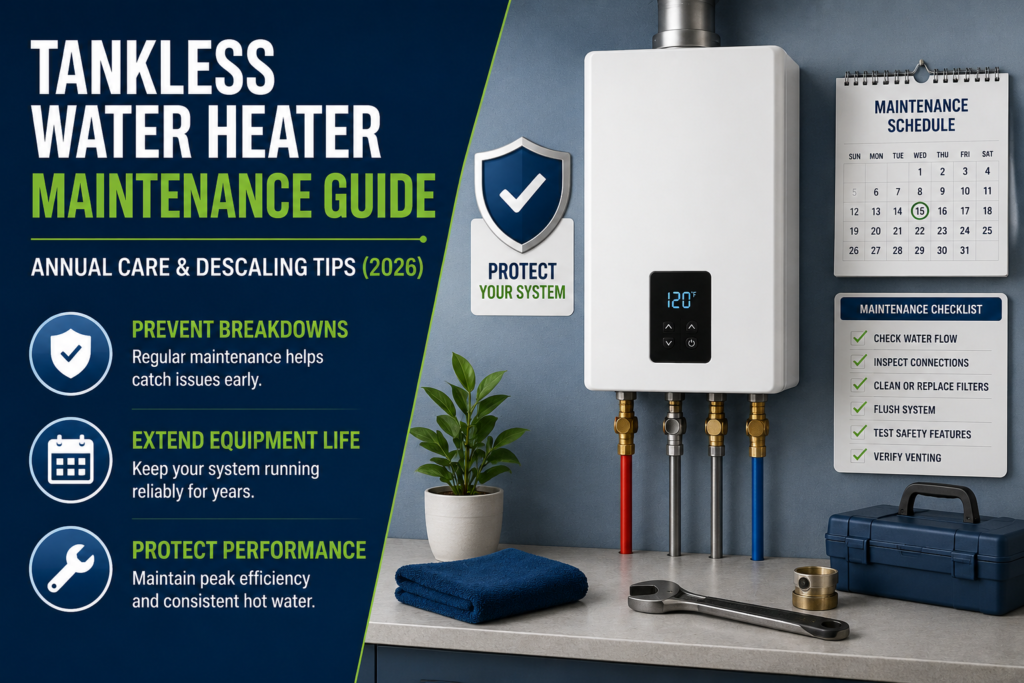
Why Regular Tankless Water Heater Maintenance Matters
Hard water conditions can cause mineral buildup inside a tankless system. Over time, this scale accumulation reduces efficiency, strains internal components, and can shorten the lifespan of the heater.
Regular tankless water heater maintenance helps:
• Improve energy efficiency
• Extend equipment lifespan
• Maintain consistent water temperature
• Prevent unexpected breakdowns
• Protect manufacturer warranty coverage
According to the U.S. Department of Energy, routine maintenance can help improve efficiency and extend the lifespan of water heating equipment.
Tankless Water Heater Maintenance Schedule
| Maintenance Task | How Often | Why It Matters |
|---|---|---|
| Flush / descale | Once per year | Removes mineral buildup and keeps efficiency high |
| Clean inlet filter | Every 6–12 months | Prevents low water flow and overheating |
| Check venting (gas units) | Once per year | Ensures safe combustion |
| Inspect electrical connections | Once per year | Prevents shutdowns and errors |
| Check pressure relief valve | Once per year | Prevents damage from high pressure |
| Full professional service | Every 1–2 years | Keeps warranty valid and extends lifespan |
What Should Be Included in Tankless Water Heater Maintenance
A comprehensive tankless water heater maintenance routine typically includes:
• Full system inspection
• Flushing and descaling of the heat exchanger
• Cleaning the water inlet filter
• Checking gas supply and venting systems
• Inspecting electrical components
• Performance testing of the system
One of the most important maintenance tasks is learning how to flush a tankless water heater to remove mineral buildup from the heat exchanger.
Homes with hard water may require more frequent maintenance. Our Tankless Water Heater Cleaning Guide explains how mineral buildup affects cleaning intervals.
How Often Should Tankless Systems Be Serviced?
Most manufacturers recommend performing tankless water heater maintenance once per year.
However, homes with hard water or high hot-water usage may require flushing every 6–9 months to prevent mineral buildup.
Regular servicing helps maintain efficiency and ensures the heater operates safely and consistently.
Signs Your Tankless Water Heater Needs Maintenance
Many homeowners wait until performance declines before scheduling maintenance. However, preventative care should happen before visible issues appear.
You may need maintenance if you notice:
• Reduced water pressure
• Inconsistent water temperature
• Longer heating times
• Error codes appearing intermittently
• Slight increases in energy bills
In many cases, mineral buildup is the cause of these problems. Flushing the system can often restore proper performance.
Why Hard Water Increases Maintenance Needs
In many areas, especially regions with mineral-rich water, tankless heaters can accumulate scale faster than expected.
Mineral-heavy water increases buildup inside the heat exchanger, which can reduce efficiency and restrict water flow over time.
Regular maintenance helps:
• Prevent scale buildup
• Maintain consistent hot water performance
• Extend the life of the heating system
• Reduce the likelihood of unexpected repairs
Scale buildup can reduce efficiency and increase operating costs over time. Learn more in our Tankless Water Heater Efficiency Guide, where we explain how maintenance affects energy consumption and long-term performance.
Does Tankless Water Heater Maintenance Affect Lifespan?
Yes. Proper tankless water heater maintenance plays a major role in how long the system lasts. Most tankless water heaters are designed to last 15–20 years, but lack of maintenance can reduce lifespan significantly.
Mineral buildup inside the heat exchanger forces the unit to work harder, which increases wear on internal components. Over time, this can lead to overheating, reduced efficiency, and early failure.
Regular maintenance helps extend lifespan by:
- Keeping the heat exchanger clean
- Maintaining proper water flow
- Preventing overheating
- Protecting internal sensors
- Reducing strain on the burner and electrical parts
If you want to understand how long tankless systems usually last, see our Tankless water heater lifespan guide for more details.
Protect Your Tankless Water Heater with Routine Maintenance
Tankless systems are designed to last many years, but only when they receive proper care. Regular tankless water heater maintenance helps maintain efficiency, prevents costly repairs, and keeps the system operating safely.
Proper tankless water heater maintenance works best when combined with regular flushing, correct sizing, and quick troubleshooting when problems appear. You may also want to read our tankless water heater flush guide, tankless water heater troubleshooting guide, tankless water heater lifespan guide, and tankless water heater installation cost guide to better understand how maintenance affects performance and long-term reliability.
Annual flushing, filter cleaning, and system inspections are simple steps that can help ensure reliable hot water for years to come.
For homeowners performing annual flushing themselves, using the proper equipment and cleaning solutions can make maintenance easier and more effective. See our:
- Best Tankless Water Heater Flush Kit (2026 Buyer’s Guide)
- Best Tankless Water Heater Descaling Solution (2026 Buyer’s Guide)
Final Thoughts
Regular tankless water heater maintenance is one of the best ways to maximize efficiency, prevent expensive repairs, and extend the life of your unit. In most homes, annual maintenance is sufficient, although homes with hard water may require more frequent flushing.
Whether you perform maintenance yourself or hire a professional, keeping up with cleaning, descaling, and inspections can help your tankless water heater provide reliable hot water for 15 to 20 years or more.