
Choosing the best tankless water heater comes down to one thing: matching the right flow rate (GPM) and fuel type to your home.
The wrong unit can lead to weak water pressure or temperature drops. The right one delivers consistent hot water across your entire home.
Below, we compare the best tankless water heaters based on performance, efficiency, and real-world use — so you can quickly find the right model.
Disclosure: As an Amazon Associate, we earn from qualifying purchases. This comes at no extra cost to you and helps support our research and reviews.
If you’re still deciding between systems, see our tank vs tankless water heater guide to compare cost, performance, and long-term value.
Best Tankless Water Heaters (Quick Picks)
If you want the short answer:
Best Overall: Rinnai RXP199iN
Best Budget Gas: Rinnai RE140eN
Best Budget Electric: EcoSmart ECO 27
Best Premium Electric: Stiebel Eltron Tempra 24 Plus
These models cover the most common home sizes and use cases.
📊 Quick Comparison: Top Tankless Water Heaters (2026)
| Model | Type | Max GPM | Best For | Check Price |
|---|---|---|---|---|
| Rinnai RXP199iN | Gas (Condensing) | 11 GPM | Large Homes (3–4 baths) | 👉 View on Amazon |
| Rinnai RE140eN | Gas (Non-Condensing) | 5.3 GPM | Small–Mid Homes | 👉 View on Amazon |
| EcoSmart ECO 27 | Electric | 6.5 GPM | Budget Electric | 👉 View on Amazon |
| Stiebel Eltron Tempra 24 Plus | Electric | 5 GPM | Premium Electric | 👉 View on Amazon |
Best 5 GPM Tankless Water Heater
If you’re looking for a 5 GPM tankless water heater, you’re likely sizing for a small home, apartment, or 1–2 bathroom setup.
Units in this range provide enough hot water for showers, sinks, and light simultaneous use without the cost of a full whole-house system.
Top options include:
- EcoSmart ECO 27
- Stiebel Eltron Tempra 24 Plus
These models balance performance, efficiency, and affordability for smaller households.
1️⃣ 🏆 Best Overall Tankless Water Heater
Rinnai RXP199iN (Condensing Natural Gas)
Best For
✅ Homes with 3–4 bathrooms
✅ Families using multiple showers at the same time
✅ Homeowners planning to stay in their home for years
Not Ideal For
❌ Apartments
❌ Small one-bathroom homes
❌ Buyers looking for the lowest upfront cost
⭐ Our Recommendation
If your home has three or more bathrooms and your family often uses hot water in multiple places at the same time, this is our top recommendation. It combines excellent performance, energy efficiency, and long-term reliability, making it a great choice for most households.
Pros
✓ High 11 GPM flow rate
✓ Excellent for multi-bathroom homes
✓ Condensing design for improved efficiency
✓ Strong brand reputation
✓ Long warranty coverage
Cons
✘ Higher upfront investment
✘ Professional installation recommended
Key Specifications
Flow Rate: Up to 11 GPM
Fuel Type: Natural Gas
Maximum Input: 199,000 BTU
Installation: Indoor
Technology: Condensing
Warranty: 12-Year Heat Exchanger
🔧 Recommended Accessories (May Be Needed for Installation)
Installing a tankless water heater often requires a few additional components depending on your home’s plumbing, venting, and local building codes. Planning ahead can help avoid installation delays and make future maintenance much easier.
Isolation Valve Kit
Recommended for almost every installation.
An isolation valve kit allows the water heater to be serviced and flushed without shutting off water to the entire house. It also makes routine maintenance much easier.
Tankless Flush Kit
Recommended for annual maintenance.
Most manufacturers recommend flushing a tankless water heater periodically to remove mineral buildup. A flush kit includes the pump, hoses, and bucket needed for the job.
Vent Kit (If Required)
Only needed for certain installations.
Some indoor gas tankless water heaters require manufacturer-approved venting materials. Before purchasing, verify the venting requirements listed in the installation manual or consult your installer.
💡 Installation Tip:
If you’re hiring a licensed plumber, ask which accessories they’ll be supplying before ordering them yourself. Some installers include items like isolation valves or venting components in their installation package.
2️⃣ 💰 Best Budget Gas Tankless Water Heater
Rinnai RE140eN
Best For
✅ Homeowners looking for dependable performance at a lower price
✅ Homes with 1–2 bathrooms
✅ Outdoor installations in warmer climates
Not Ideal For
❌ Large homes with high hot water demand
❌ Families frequently using multiple showers simultaneously
❌ Homeowners wanting maximum energy efficiency
⭐ Our Recommendation
If you’re looking for reliable performance at a more affordable price, this is one of our favorite budget gas tankless water heaters. It delivers reliable hot water for smaller households while keeping the upfront investment lower than many condensing models.
It’s an excellent choice for smaller households that don’t need the higher capacity of premium models..
Pros
✔ Excellent value for the price
✔ Trusted Rinnai reliability
✔ Ideal for 1–2 bathroom homes
✔ Outdoor installation simplifies venting
Cons
✘ Lower flow rate than premium models
✘ Less energy efficient than condensing units
3️⃣ ⚡ Best Budget Electric Tankless Water Heater
EcoSmart ECO 27
Best For
✅ Apartments and condos
✅ Small to mid-sized homes
✅ Homes without natural gas
Not Ideal For
❌ Large homes with high hot water demand
❌ Multiple showers running at the same time
❌ Homes requiring whole-home high-capacity hot water
⭐ Our Recommendation
If your home doesn’t have natural gas and you’re looking for an affordable electric tankless water heater, the EcoSmart ECO 27 is an excellent choice. Its self-modulating technology helps improve energy efficiency, and it’s well suited for apartments, condos, and many small to mid-sized homes.
Pros
✔ Excellent value for the price
✔ Energy-efficient self-modulating design
✔ Compact and space-saving
✔ Ideal for apartments, condos, and smaller homes
Cons
✘ Lower hot water output than comparable gas models
✘ May require an electrical panel upgrade in some homes
4️⃣ 🔥 Best Premium Electric Tankless Heater
Stiebel-Tempra-24-Plus
Best For
✅ Homeowners wanting premium electric performance
✅ Apartments, condos, and small to mid-sized homes
✅ Buyers who prioritize consistent water temperature
Not Ideal For
❌ Large homes with high hot water demand
❌ Whole-home use in larger households
❌ Budget-conscious buyers
⭐ Our Recommendation
If you’re looking for premium electric performance and precise temperature control, this is one of the best electric tankless water heaters available. Its advanced flow control technology helps maintain a consistent water temperature, making it an excellent choice for homeowners who value comfort and long-term reliability.
While electric models generally provide lower flow rates than gas units, this model stands out for its build quality, quiet operation, and dependable long-term performance.
Pros
✔ Excellent temperature control
✔ Quiet operation
✔ High build quality
✔ Reliable long-term performance
Cons
✘ Higher price than entry-level electric models
✘ Not ideal for large multi-bathroom homes
How to Choose the Best Tankless Water Heater
Choosing the right tankless water heater comes down to a few key factors, including your home’s hot water demand, fuel type, and installation requirements. Understanding these basics will help you choose a system that fits your household’s needs.
Plan for Maintenance and Long-Term Reliability
Tankless systems require periodic flushing and maintenance to prevent mineral buildup and extend lifespan. Learn more in the tankless water heater maintenance guide and tankless water heater lifespan guide.
Choose the Right Fuel Type
Gas tankless water heaters generally provide higher flow rates and are better suited for larger households. Electric models are more compact and can be easier to install in homes without natural gas access. See our tankless water heater electric vs gas guide for a full comparison.
Choose the Right Flow Rate (GPM)
Flow rate determines how many fixtures can run simultaneously. A small household may only require 4–6 GPM, while larger homes often need systems capable of 8–11 GPM. Use the tankless water heater flow rate guide to calculate your demand.
Consider Energy Efficiency
Look for high energy factor (EF) ratings and condensing technology in gas units. Electric units are typically efficient but may require electrical upgrades. See the tankless water heater efficiency guide for detailed comparisons.
Understand the Installation Requirements
Gas models require proper venting and gas line capacity. Electric models may require panel upgrades depending on amperage requirements. See the tankless water heater installation cost guide to understand setup costs.
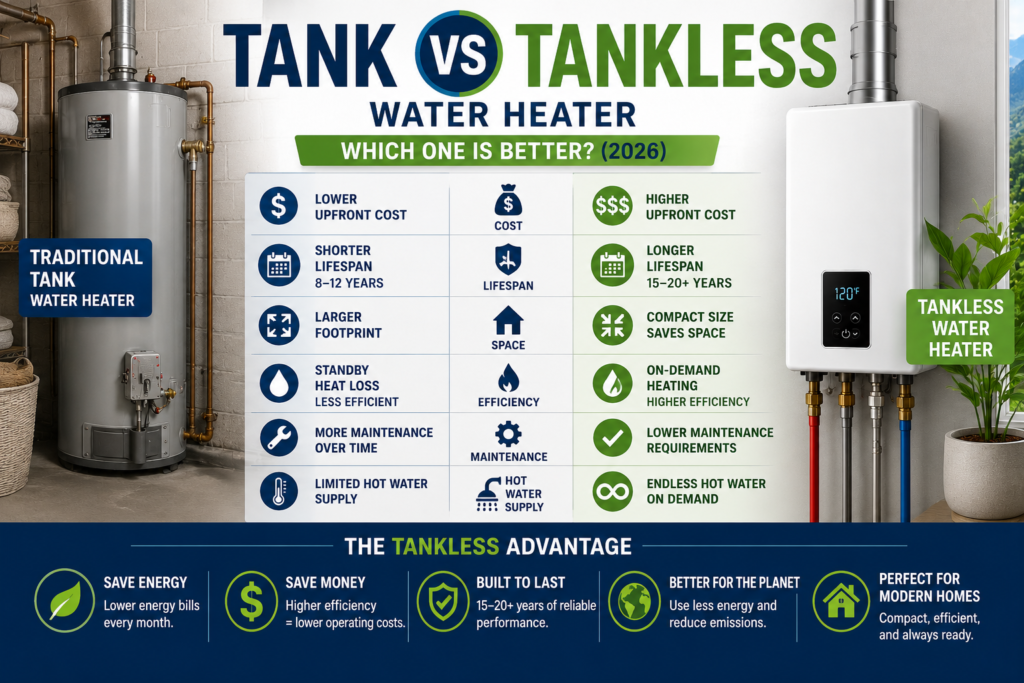
Tankless vs Tank Water Heater Comparison
Best 5 GPM Tankless Water Heaters
A 5 GPM tankless water heater is typically a good choice for apartments, condos, and smaller homes with modest hot water demand.
Our top recommendations are:
- EcoSmart ECO 27
- Stiebel Eltron Tempra 24 Plus
For many apartments, condos, and smaller homes, this capacity provides plenty of hot water without paying for a larger system than you need.
Which Tankless Water Heater Is Right for You?
The best tankless water heater depends on your home’s size, hot water demand, and whether you need a gas or electric model.
If you want the best overall performance for a busy household, the Rinnai RXP199iN is our top recommendation.
If you’re looking for a lower upfront cost and simpler installation, a non-condensing unit like the RE140eN may be the right fit.
Looking for an Electric Tankless Water Heater?
If your home doesn’t have natural gas, the EcoSmart ECO 27 and Stiebel Tempra 24 Plus are two of our top electric recommendations for apartments, condos, and smaller homes.
For a detailed comparison of the top electric models, see our Best Electric Tankless Water Heater Guide.
Tankless Water Heater Buying Guide
When comparing tankless water heaters, it’s important to think beyond upfront price. Total ownership cost includes installation, energy consumption, maintenance, and expected lifespan.
In this 2026 buyer’s guide, we break down the top tankless water heaters based on performance, durability, efficiency, and value. Whether you’re upgrading from a traditional tank system or installing a tankless unit for the first time, this guide will help you choose the right model for your needs.
Tankless water heater costs can vary significantly depending on fuel type, installation complexity, and home requirements. See our tankless water heater cost guide for a full price breakdown.
According to the U.S. Department of Energy, properly sized tankless water heaters can be more energy efficient than traditional storage water heaters
Installation Cost Considerations
Gas tankless water heaters typically cost more to install due to venting requirements and potential gas line upgrades. Electric models often have lower installation costs but may require electrical panel upgrades.
Operating Costs
Gas models are generally more cost-effective for larger households with high water demand. Electric units can be efficient for smaller homes but may increase electricity usage depending on regional utility rates.
Maintenance Requirements
Regular maintenance helps prevent scale buildup and keeps the heater working efficiently. Flushing the unit once per year can extend lifespan.
See our tankless water heater flush guide for step-by-step instructions. If you notice inconsistent temperature or performance issues, see our tankless water heater troubleshooting.
Lifespan Expectations
Most quality tankless water heaters last between 15–20 years with proper maintenance, significantly longer than traditional tank systems.
Choosing the right unit depends on your home size, fuel type, and hot water demand. If you are still comparing options, you can start with our guide to the best tankless water heater, which explains the top models for most homes.
Home size also matters. For smaller households, check the best tankless water heater for 2 bathrooms. Larger homes may need the best tankless water heater for 3 bathrooms.
For higher demand, you can also consider the best tankless water heater for 4 bathrooms or the best tankless water heater for 5 bathrooms.
For compact spaces, you may want to read our guide to the best tankless water heater for mobile homes.
Before buying, it also helps to review the tankless water heater size chart and tankless water heater installation cost guide to make sure the unit will work correctly in your home.
Below are answers to common questions homeowners ask when choosing a tankless water heater.
Why You Can Trust Our Reviews
We evaluate tankless water heaters based on performance, energy efficiency, warranty coverage, installation requirements, reliability, and real homeowner feedback. Our goal is to provide clear, unbiased recommendations that help you choose the right system for your home.
🔥Condensing vs. Non-Condensing Tankless Water Heaters
What’s the Difference?
When comparing models like the Rinnai RU199iN (condensing) and the Rinnai RE140eN (non-condensing), one of the most important differences is how they handle exhaust heat.
Condensing Tankless Water Heaters
Condensing units use two heat exchangers. The second heat exchanger captures additional heat from exhaust gases before they exit the system.
Key Benefits
- Higher energy efficiency
- Lower long-term gas usage
- Cooler exhaust temperatures
- PVC venting compatibility
- Better performance for larger homes
Because they capture more usable heat, condensing models are typically more efficient and cost less to operate over time.
Example:
The Rinnai RU199iN is a high-efficiency condensing model designed for multi-bathroom homes.
Non-Condensing Tankless Water Heaters
Non-condensing units use a single heat exchanger and vent hotter exhaust directly outside.
Key Benefits
- Lower upfront cost
- Slightly lower efficiency
- Metal venting required
- Simpler outdoor installation options
Non-condensing models are often ideal for:
- Smaller homes
- Outdoor installations
- Budget-conscious buyers
Example:
The Rinnai RE140eN is a reliable non-condensing model that works well for 1–2 bathroom homes.
📊Quick Comparison Table
| Feature | Condensing | Non-Condensing |
|---|---|---|
| Heat Exchangers | Dual | Single |
| Energy Efficiency | Higher | Moderate |
| Gas Consumption | Lower long-term | Slightly higher |
| Exhaust Temperature | Cooler | Hotter |
| Venting | PVC allowed | Metal venting required |
| Upfront Cost | Higher | Lower |
| Best For | Large homes | Small to mid-sized homes |
FAQ
1. What size tankless water heater do I need?
The right size depends on your household’s peak hot water demand, measured in gallons per minute (GPM). A small household using one or two fixtures at a time may only require 4–6 GPM, while larger homes with multiple bathrooms running simultaneously often need 8–11 GPM. Use the tankless water heater size chart to choose the correct unit.
2. Are tankless water heaters more energy efficient than traditional tank systems?
Yes, when properly sized and installed, tankless water heaters are generally more energy efficient because they heat water on demand instead of continuously storing and reheating it. Condensing gas models typically offer the highest efficiency, while electric models are also efficient but may increase electrical load depending on usage.
3. How long do tankless water heaters last?
Most high-quality tankless water heaters last 15–20 years with proper maintenance. This is significantly longer than traditional storage tank systems, which typically last 8–12 years. Regular flushing and descaling are essential to maintain performance and extend lifespan.
4. Do tankless water heaters require maintenance?
Yes. Tankless systems require periodic flushing to remove mineral buildup, especially in areas with hard water. Many manufacturers recommend annual maintenance to ensure efficiency, prevent scale accumulation, and protect warranty coverage.
If you ever experience performance issues, our tankless water heater troubleshooting guide explains the most common problems and how to fix them.
Choosing the correct tankless water heater size and fuel type is the most important factor for performance. Many problems homeowners experience are caused by undersized units rather than product defects.
Conclusion
Choosing the best tankless water heater depends on your home size, hot water demand, and installation setup. Gas models are generally better for large households requiring higher flow rates, while electric models offer a compact and efficient solution for smaller homes.
Understanding flow rate, installation cost, and long-term maintenance is essential before making a decision. Use our tankless water heater flow rate guide, installation cost guide, and maintenance guide to plan your system correctly and avoid common performance problems.